
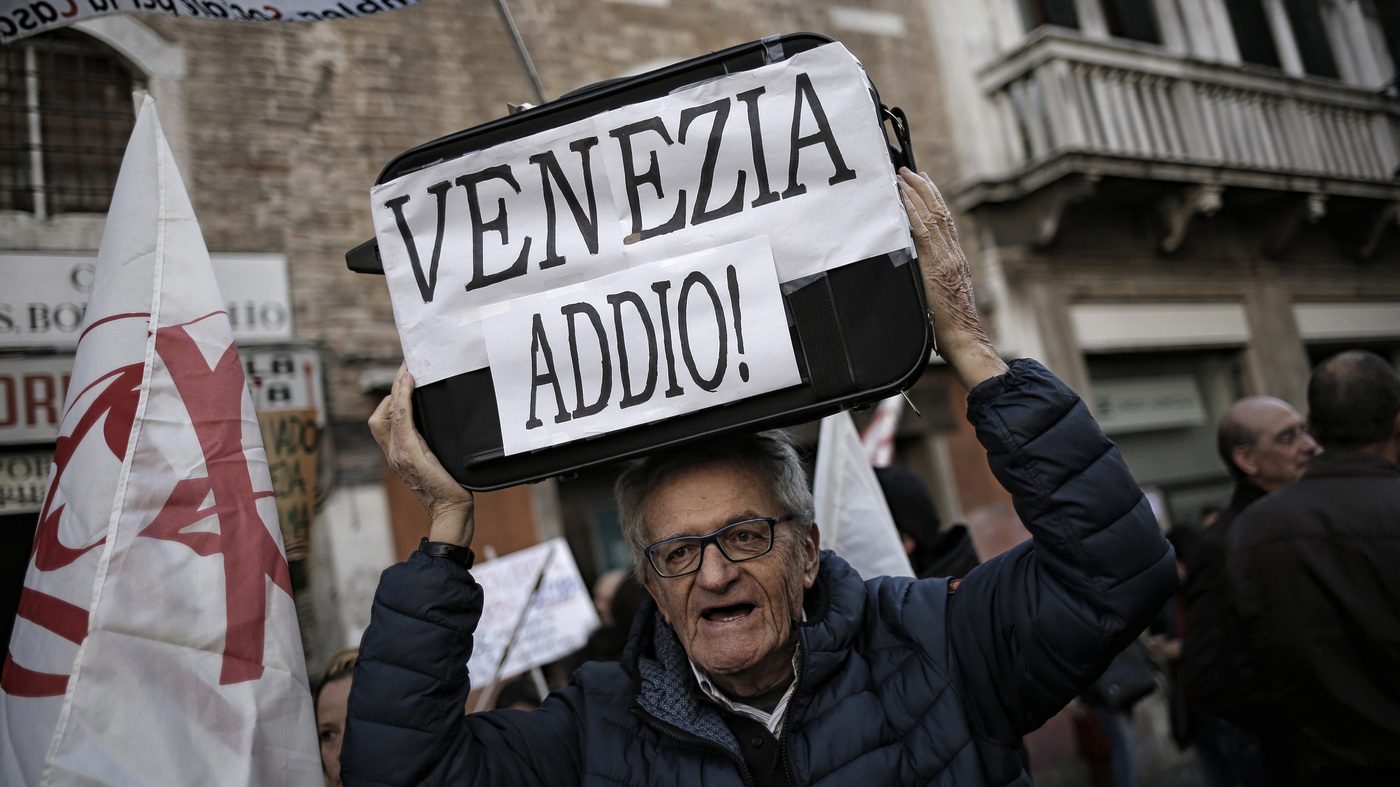
Souvenir shops and stores selling “Venetian specialties” (which are, in reality, specialties of Taiwan) are like mushrooms: they pop up everywhere, even among the big brand stores around San Marco. Add to that the anonymous leather goods shops scattered through the most hidden calli. The most worrying part is that, given the trend, the numbers are only set to grow.
In the process, local craftsmanship is being brought to its knees.
There were 2,600 artisans in 1976. By 2017, only 1,080 remained, with entire trades on the verge of extinction on the island, like photographers, barbers, and florists.
Of these 1,080 survivors, a good share have taken an acting course to learn how to tell the story of their craft to tourists and compete with Made in China. These artisans will play themselves, showing who they are, what they do, and how they do it: they'll talk about the effort, the dedication, the satisfaction, the way they should be explaining it to the tourists who walk into their workshops, not out of vanity but to defend themselves from the Chinese seller next door. Stage fiction, in other words, is entirely replaced by reality and the plain necessity of survival.
There are 1,162 foreign-owned business licenses, with Chinese (354) and Bangladeshi (248) owners leading the way. The Chinese, in particular, are increasingly interested in Italian real estate, and one of the most sought-after markets, alongside Milan and Rome, is Venice itself. In 2015, property purchases by Chinese nationals across Italy rose by 223% compared to the previous year. What Venetian shopkeepers fear is a possible eastward expansion toward the Accademia area, where a smaller Chinese presence already exists compared to other districts.
The City of Venice should apply the so-called “anti-tat” decree to limit the damage, but it will never address the root cause: the runaway growth of mass tourism that creates demand for this kind of shop in the first place (last year counted 20 million tourists, a staggering number compared to the 60,000 residents left in the historic center). Venice, once a maritime and mercantile power, now risks being conquered by day-trippers. And it's low-quality tourism at that, the kind that does nothing to protect or appreciate the beauty of the islands that make up the city. To help safeguard the city's character, in mid-2017 the hashtag #EnjoyRespectVenezia was launched, alongside a campaign spreading a visitor's code, a set of tips for making the most of a visit to the city. The idea behind the initiative is that Venice can reinvent itself through sustainable tourism that values its urban character, respects its authenticity and uniqueness, and shares it with the world as a UNESCO World Heritage Site. Alongside hiring more local police officers, a lot of work has gone into marketing and information campaigns to educate visitors toward responsible, sustainable tourism and encourage behavior that reduces the city's impact. There will also be widespread informational communication, translated into eleven languages, covering six main prohibited behaviors, delivered both on-site (posters and signage) and online (short videos in specific locations, like airports and train stations). Another possible solution could be capping the number of nights allowed for apartment and Airbnb rentals. That would encourage renting to residents instead, while making the tat trade less profitable and therefore less appealing. If that happened, I'm confident a good share of the 30,000 commuters who travel into Venice for work from nearby towns would be glad to move back into the city the economy once pushed them out of.
The Guardian, the well-known British paper, has been covering the tourism threat to Venice for months. The New York Times picked up the story too, with an online piece titled “Venice, the Disneyland of the Sea.” Both papers describe the city as a constant parade of cruise ships disrupting the skyline, and low-cost flights. All of this is creating a new hybrid language, a melting pot of idioms used by shopkeepers to draw more tourists into hotels and sell a few more souvenirs, all at the expense of housing and grocery stores, and to the detriment of residents' quality of life. Even Venetian shopkeepers dislike the big cruise ships passing through the Giudecca canal, and yet the local economy can't do without them.
“Venice is sinking into an increasingly crude kind of consumption, held hostage by a wandering tourism that tries to take home a piece of the city in a few minutes,” said Gianni De Checchi, secretary of Confartigianato Venezia. I personally agree completely with De Checchi, and I'll go so far as to say that artisans are the people this city needs to invest in over the next ten years, or risk being a lost cause, because it isn't one yet.