
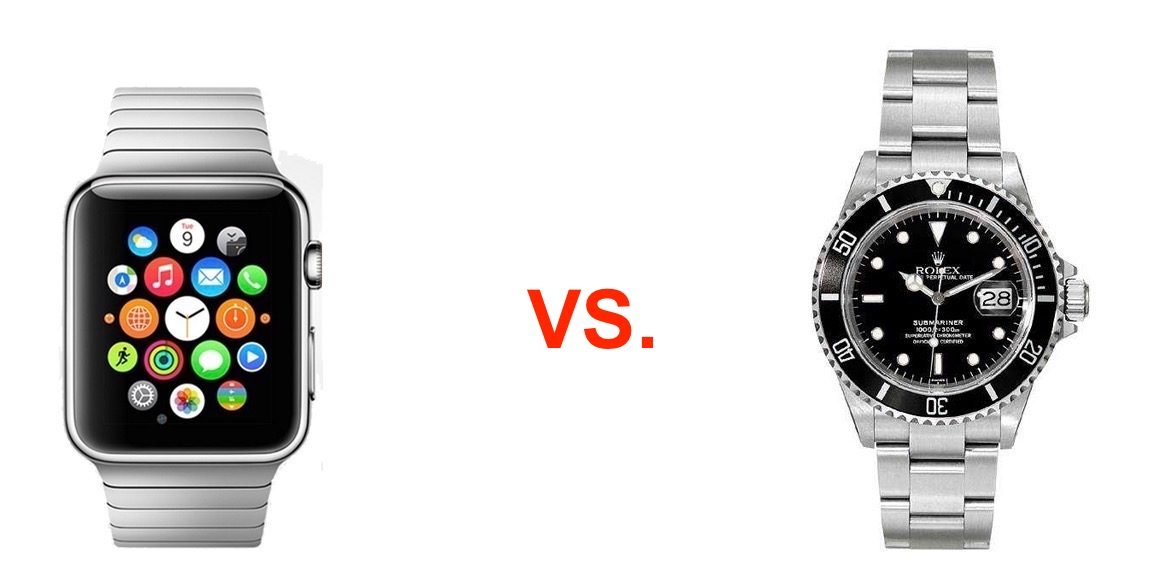
Apple Watch Series 3: starting at 379 euros. Rolex Oyster Perpetual, the entry point of the Swiss luxury house: starting at 4,500 euros.
In the last quarter of 2017, the Apple Watch outsold the entire Swiss watch industry, beating Rolex, Omega, and Patek Philippe combined, making Apple the largest watchmaker in the world.
After two years of decline, exports from the Swiss watch industry started growing again, nearing 20 billion francs, but there's no reason to celebrate: Canalys estimates that in that same quarter of 2017 alone, helped, no doubt, by the holiday shopping season, Apple sold 8 million watches, against 6.8 million combined sales from the Swiss sector, bringing Apple's 2017 total to 18.4 million units. The figure is remarkable considering Apple has only been making watches for four years, while the Swiss watch industry has been active for centuries. Apple CEO Tim Cook himself explained that the last quarter was the best ever for Apple Watch, with growth of over 50% in both revenue and units, and strong double-digit growth across every geographic segment.
Of course, if you look at the full-year numbers, Switzerland is still well ahead: 24.2 million units against Cupertino's 18.4 million.
It's clear that smartwatches are winning over our wrists, and the situation will likely keep getting worse for traditional Swiss watchmakers. The Apple Watch is becoming bigger than every Swiss watch brand except Rolex, and Swatch is the most exposed in this scenario.
Swiss watchmakers are well aware of the demand for wearable technology, but they're reluctant to dive in, since the mechanical components, the pride of the Swiss industry, would be replaced by microprocessors, undermining the very culture of Swiss watchmaking. On top of that, high-end brands risk damaging their status by selling wearables cheaper than their traditional watches. That puts Swatch in the riskiest position, since, more than its peers, it relies on basic products, as smartwatches, after all, are settling into the mid-to-high range, between 500 and 3,000 euros. According to a UBS report, the market share of Swiss luxury watchmaking could keep eroding as smartwatch technology improves. The bank based that forecast on current market shares: smartwatch volumes sit between 30 and 40 million units, against 28 million for Swiss watches.
One thing that reassures Swiss watchmakers, though, is that their products are essentially jewelry, meaning they're timeless and can carry emotional value as gifts. A smartwatch, on the other hand, becomes obsolete within a few years once the battery wears out or the manufacturer stops providing software updates.
In a way, comparing Apple to the entire Swiss industry is a good measure of just how powerful the company has become: some Swiss watches are designed as luxury pieces, like Rolex, costing several thousand euros, while other Swiss brands sit in the mass market, like Swatch, with watches that cost even less than Apple's cheapest tier.
So why is the Swiss watch industry in crisis?
First, authorized dealers face competition from the so-called grey market, where new models can be bought for 15 to 60% less than the official price, both online and in physical stores. According to Fortune, the growth of this market is partly due to overproduction caused by rising sales between 2009 and 2015. Luxury watches are no longer as rare as they once were, which is pushing more people, especially younger buyers, toward the grey market.
Another factor behind the crisis is undoubtedly the slowdown of the Chinese economy. Hong Kong is the top export market for Swiss watches, and according to the Federation of the Swiss Watch Industry, sales to customers there fell by 22.9%.
The third factor: after the Swiss National Bank scrapped the euro-franc exchange cap on 15 January 2015, a cap introduced in 2011 to boost exports, the Swiss franc's value rose against the euro, driving up production costs for watchmaking. The drop in watch exports fits into a broader decline in Swiss exports overall, and the main cause is precisely the strength of the franc.
The fourth and final cause is, of course, the threat posed by the spread of smartwatches: according to a Deloitte study, in 2014 only 11% of watch industry executives saw smartwatches as a competitive threat, while today that figure has risen to 25%.
The Swiss watch industry now has to reckon with something it once considered a passing fad, and which is instead settling firmly into the market: it faces a noticeable sales decline and an unexpected overtaking by the smart sector.
It will be interesting to watch how these historic brands respond, and whether they can follow the example, and the exception, in Switzerland, of Tag Heuer, which launched its luxury-adjacent Connected model at 1,350 euros, and expects renewed growth thanks to connected watches. The LVMH-owned brand is targeting 200,000 sales and has set up the first microprocessor assembly line in La Chaux-de-Fonds, creating between 30 and 40 new jobs. Despite that show of innovation, the brand still accounts for only 1% of smartwatches sold globally, against Apple's 63% and Samsung's 17%. A separate note goes to Swatch's touch products, which remain anchored mostly to younger buyers and have shown a track record of misreading the market: Swatch CEO Nick Hayek himself has expressed little confidence in the category, calling the Apple Watch just a toy incapable of sparking a revolution.